Intricate geometric patterns intertwine with Qur’anic inscriptions and floral ornament, creating a striking focal point within the prayer hall.
Equally impressive is the richly carved walnut minbar, crafted using the traditional kündekâri technique. Hundreds of precisely cut wooden pieces fit together without nails or glue, allowing the structure to expand and contract naturally with seasonal changes in humidity.
More than seven centuries later, the precision of its construction remains astonishing.
—
A Bridge Between Central Asia and Anatolia
The Eşrefoğlu Mosque also reflects one of the great cultural movements of the medieval Islamic world.
Following the Mongol invasions of Central Asia in the thirteenth century, many highly skilled craftsmen migrated westwards into Anatolia. They brought with them advanced knowledge of timber construction, woodcarving and decorative techniques that blended with Seljuk architectural traditions.
The result was an architectural style found almost nowhere else in the Islamic world.
The wooden hypostyle mosques of Anatolia stand as tangible evidence of this remarkable exchange of ideas, technologies and artistic traditions across Asia.
—
A Living Monument
Unlike many medieval monuments preserved only as museums or archaeological sites, the Eşrefoğlu Mosque continues to serve its original purpose.
Daily prayers are still held beneath the same cedar beams installed at the end of the thirteenth century. This uninterrupted continuity of religious life has played an important role in preserving the mosque’s authenticity and was recognised during its inscription on the UNESCO World Heritage List.
—
Visiting Eşrefoğlu Mosque
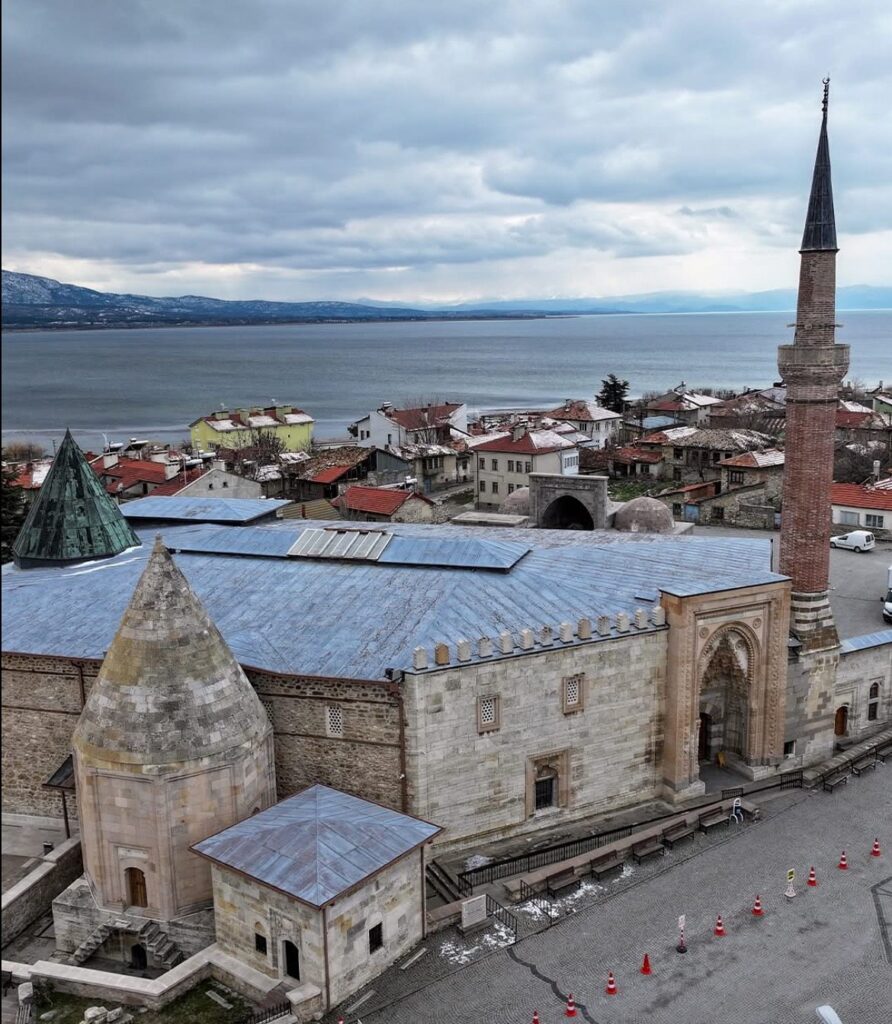
Located in the historic centre of Beyşehir, approximately 90 kilometres west of Konya, the mosque is easily combined with a visit to Lake Beyşehir, Türkiye’s largest freshwater lake, and the nearby Kubadabad Palace, once the summer residence of the Seljuk sultans.
For travellers interested in Islamic art, medieval engineering or UNESCO World Heritage sites, Eşrefoğlu Mosque offers an experience unlike anywhere else in Türkiye.
There are no vast Ottoman domes or towering minarets competing for attention.
Instead, visitors discover something quieter—and perhaps even more extraordinary: a masterpiece of wood, light and craftsmanship that has survived almost unchanged for more than seven centuries.
—
Why Visit Eşrefoğlu Mosque?
UNESCO World Heritage Site (since 2023)
One of the world’s finest surviving wooden hypostyle mosques
Remarkable 700-year-old cedar columns and painted timber ceiling
Ingenious medieval snow-pit humidity control system
Outstanding Seljuk tilework and kündekâri woodcarving
An exceptional example of Central Asian and Anatolian architectural traditions