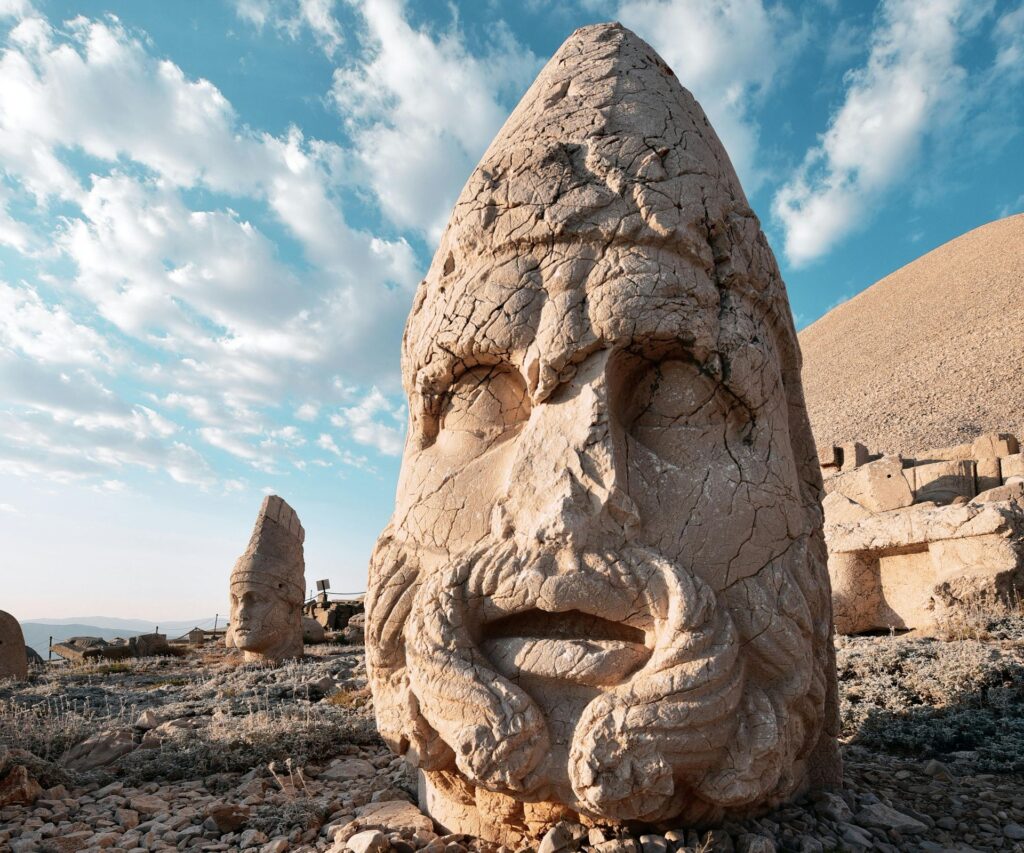
Hidden high in the mountains of southeastern Türkiye, Mount Nemrut is one of the country’s most extraordinary archaeological treasures. Rising 2,134 meters above sea level, this UNESCO World Heritage Site is famous for its colossal stone statues, breathtaking sunrise and sunset views, and the mysterious royal sanctuary built more than 2,000 years ago.
For travelers fascinated by ancient civilizations, mythology, and breathtaking landscapes, Mount Nemrut offers an unforgettable journey into the heart of the ancient Kingdom of Commagene.
Where is Mount Nemrut?
Mount Nemrut (Nemrut Dağı) is located in Adıyaman Province in southeastern Türkiye, approximately 40 kilometers north of the town of Kahta. Geographically, it lies on the northern edge of ancient Mesopotamia, the legendary cradle of civilization between the Tigris and Euphrates rivers.
Its remote mountain setting only adds to the mystical atmosphere surrounding this remarkable archaeological site.
The Kingdom of Commagene
The sanctuary was commissioned by King Antiochus I of Commagene, who ruled during the 1st century BC.
Commagene was a unique kingdom where Greek and Persian cultures merged. Antiochus proudly claimed descent from both Alexander the Great’s successors and the Persian Achaemenid dynasty, presenting himself as a ruler who united East and West.
This remarkable cultural fusion is reflected throughout the monument.
The Monument on the Summit
The summit is crowned by an enormous artificial burial mound measuring approximately 49 meters high and 152 meters in diameter.
Surrounding the tumulus are colossal limestone statues reaching 8 to 9 meters in height, depicting:
- King Antiochus I
- Zeus-Oromasdes
- Apollo-Mithras-Helios-Hermes
- Heracles-Artagnes-Ares
- Eagles
- Lions
Originally seated on massive thrones, the statues now rest with their heads scattered across the terraces, most likely due to centuries of earthquakes.
These fallen stone heads have become one of Türkiye’s most recognizable archaeological icons.
A Meeting Point of Civilizations
Unlike many ancient monuments dedicated to a single culture, Mount Nemrut represents a fascinating blend of civilizations.
The statues display Greek-style facial features while wearing Persian royal garments and headdresses. The deities themselves combine Greek and Iranian religious traditions, illustrating the remarkable cultural diversity of the Hellenistic world.
This unique artistic synthesis makes Mount Nemrut unlike any other archaeological site in the Mediterranean or Middle East.
UNESCO World Heritage Site
In 1987, Mount Nemrut was inscribed on the UNESCO World Heritage List in recognition of its exceptional historical and cultural significance.
Although the monument was known locally for centuries, it attracted international attention only after its rediscovery by European explorers in the late nineteenth century.
Archaeological excavations have continued for decades, yet the actual burial chamber of King Antiochus has never been found, adding another layer of mystery to this extraordinary monument.
Visiting Mount Nemrut
Today, visitors can reach the mountain via a modern road leading close to the summit, followed by a short uphill walk.
The site is especially famous for its spectacular sunrise and sunset, when warm golden light illuminates the ancient statues against the dramatic mountain landscape.
Winter snowfall often makes the mountain inaccessible, so the best time to visit is between late spring and autumn.
Why Visit Mount Nemrut?
Mount Nemrut is more than an archaeological site. It is a place where mythology, astronomy, royal ambition, and ancient engineering come together in one of the world’s most remarkable mountain sanctuaries.
Whether you are passionate about history, photography, or discovering hidden UNESCO treasures, Mount Nemrut promises an experience unlike anywhere else in Türkiye.
Travel Tip: Mount Nemrut is best explored as part of a journey through southeastern Türkiye, where travelers can also discover ancient cities, Roman bridges, traditional villages, and the rich cultural heritage of historic Mesopotamia